View Project
IOT Paralysis Patient Health Care Project
Components:
Hardware Components:
- ATmega Microcontroller
- Accelerometer & Gyroscope (MPU6050 or similar)
- RF Transmitter and Receiver Modules
- ESP8266 Wi-Fi Module
- LCD Display (16x2 or similar)
- Crystal Oscillator
- Resistors, Capacitors, Diodes, Transistors
- Push Buttons, Switch
- LED Indicators
- PCB and Breadboards
- Power Supply Adapter / Transformer
- Cables and Connectors
- ICs and IC Sockets
Software Components:
Arduino IDE (Compiler)
- Programming Language: Embedded C
- IoTGecko Server for Cloud Storage and Monitoring
Project Description:
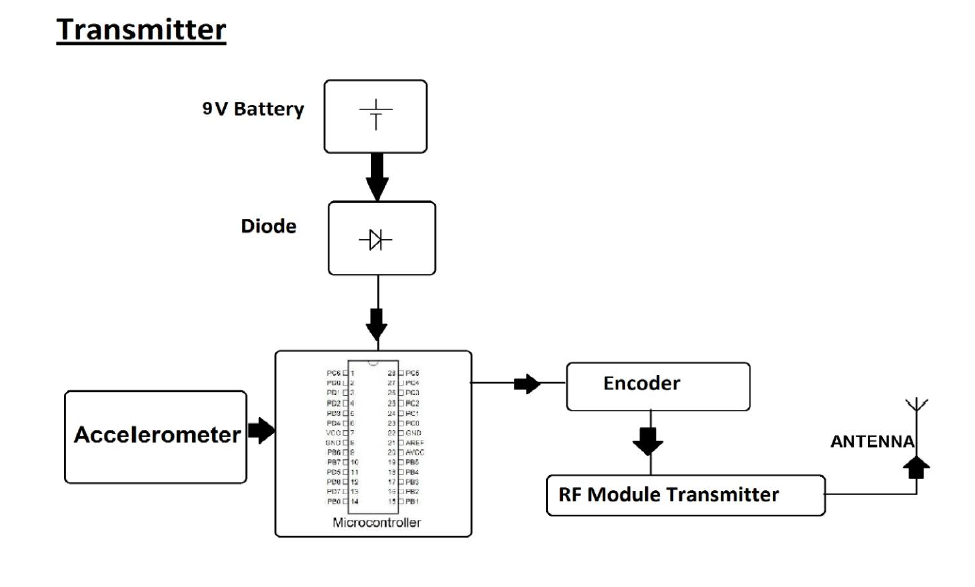
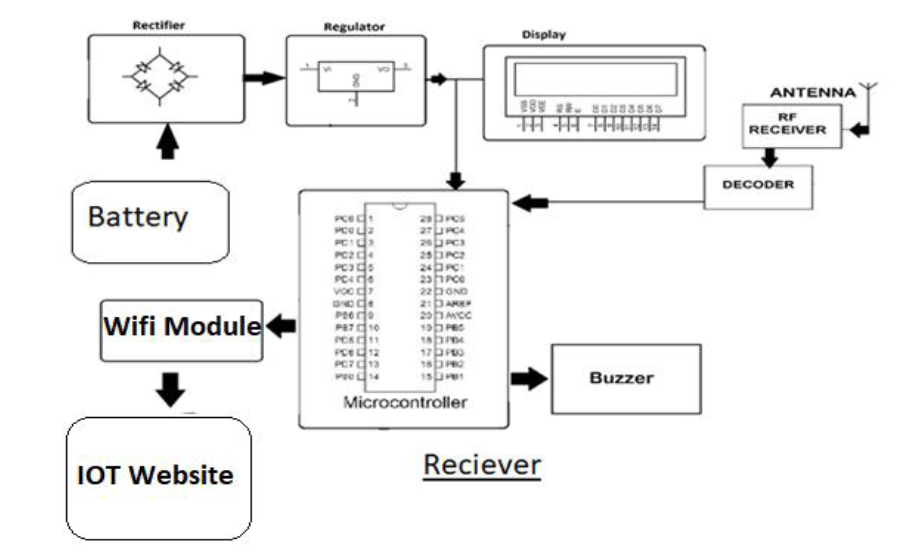
The IoT-based paralysis patient health care system is an innovative solution aimed at aiding paralyzed individuals in communicating essential messages to caregivers, nurses, or family members through hand movements. By integrating motion detection sensors with microcontroller-based circuits and IoT capabilities, the system allows patients to send alerts or messages wirelessly. The device interprets hand gestures using an accelerometer and gyroscope, then sends this data via RF transmission to a receiver. The receiver, connected with an ESP8266 Wi-Fi module, displays the data on an LCD and updates it to an IoT cloud server (IoTGecko), ensuring caregivers or loved ones are notified in real-time.The system uses a hand-mounted accelerometer and gyroscope module to capture specific movements made by the patient. These movements are interpreted by the microcontroller and encoded into signals. The transmitter sends this data via RF to the receiver circuit, which displays the message on an LCD screen and simultaneously transmits it to the IoTGecko server using the ESP8266 Wi-Fi module. The caregiver or family member can then view the patient's request or status online in real-time.This IoT-based health care device offers a smart and practical solution for paralysis patients to communicate essential needs without verbal interaction. By combining motion sensing, wireless transmission, and cloud-based monitoring, the system bridges the gap between the patient and caregivers, promoting better care and improved quality of life.

Accelerate innovation with world-class tech teams We’ll match you to an entire remote team of incredible freelance talent.