
View Project
Wearable Computer with Temperature and Lidar Sensing
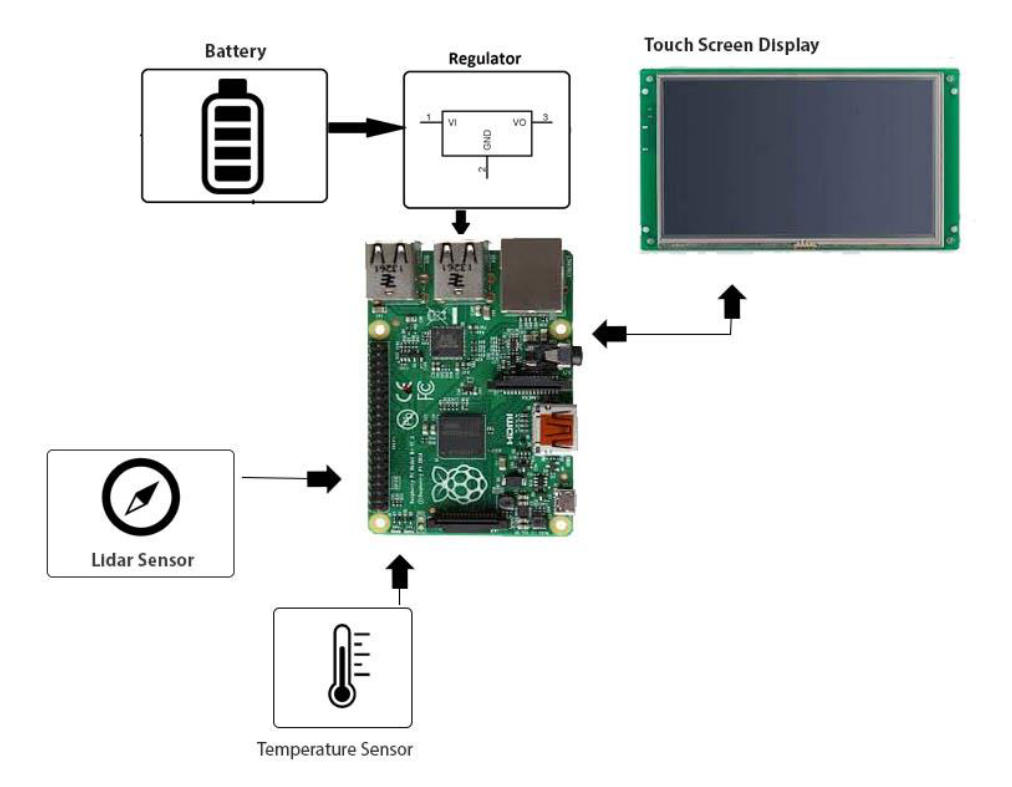
Components:
Components Used:
Hardware:
- Raspberry Pi Controller
- Li-ion Battery Pack
- Touch Screen Display (TFT/LCD)
- Contactless Temperature Sensor (e.g., MLX90614)
- LiDAR Sensor (e.g., VL53L0X)
- PCB Board, Cables, Connectors
- LED indicators, Buzzer, Resistors, Capacitors, Transistors
- Watch Strap and Casing
Software:
- Raspbian OS (Linux-based)
- Python for sensor interfacing
- GUI (Tkinter or PyQt) for display
- Browser (e.g., Chromium) for web access
- Custom alert and sensor monitoring scripts
Project Description:
With the advancement of technology, wearable electronics have become part of everyday life. This project proposes a next-generation smart wearable device — a wearable computer based on Raspberry Pi that combines computing power with real-time sensing. The device is mounted on a wrist strap and is equipped with a touchscreen display, temperature sensor, and LiDAR-based distance sensor. It operates on a Linux-based system and provides functionalities like internet browsing, contactless temperature monitoring, and accurate distance measurement. This wearable solution is especially useful in fields like healthcare, industrial measurement, and smart lifestyle devices.The wearable computer uses a Raspberry Pi as its core processor, running a Linux OS. A touchscreen display is mounted for GUI-based interaction. The internal Wi-Fi module enables internet access, allowing users to browse and perform tasks similar to a desktop or smartphone. A contactless temperature sensor reads the user’s or external body temperature and raises alerts if abnormal values are detected. A LiDAR sensor measures distance by calculating the time delay of a reflected laser beam, with the data displayed in real-time on the screen. All components are powered by a rechargeable battery and neatly integrated into a wrist-wearable format.The wearable computer with temperature and LiDAR sensing offers a unique combination of computing and smart sensing in a portable form factor. It opens new doors for wearable technology applications, providing users with essential tools for health monitoring and measurement on the go. This project demonstrates the future potential of smart, compact, multifunctional devices designed for everyday use and professional applications alike.

Accelerate innovation with world-class tech teams We’ll match you to an entire remote team of incredible freelance talent.